Introduction
Tomsk—city of wooden facades, student life, and the slow curve of the Tom River—offers a fertile ground for a modern spiritual education inspired by the archetypal wisdom of the Dolmen Sages. This is not a call to exoticism but an invitation: to learn from stone-deep patience, taiga resilience, and the inner language of the Soul. Here, ancient teachings meet riverside paths, university halls, and communal kitchens to form a living practice of meditation, self-discovery, and a Space of Love.
The Dolmen Sage as Metaphor
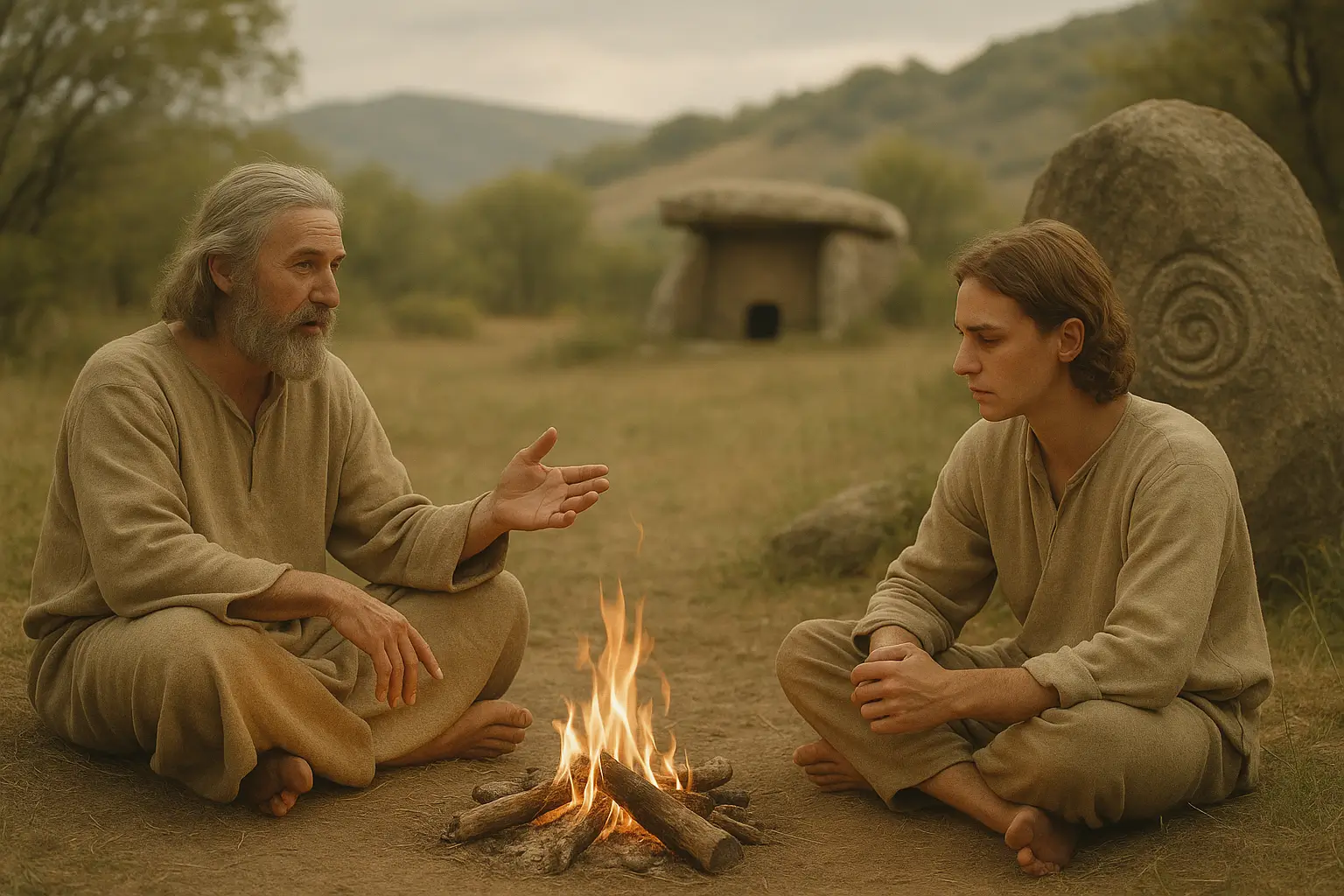
The «Dolmen Sages» are a poetic archetype—stone guardians of patience, keepers of simple truths, and teachers of rhythm and silence. In Tomsk, that wisdom translates into practices that:
— honor stillness and endurance (like weathered stone),
— cultivate deep listening (to self and landscape),
— integrate ancient ritual with everyday living.
Why Tomsk Is a Living Classroom
— The Tom River: a natural mirror for contemplative practices and seasonal reflection.
— Taiga and parks: accessible forests teach slow presence, breath, and cyclical time.
— Academic and cultural life: students, libraries, and theaters create communities hungry for depth.
— Long winters and bright summers: conditions that sharpen inward work—reflection in cold months, embodiment in light.
Core Practices Inspired by Ancient Teachings
Below are practical, rooted exercises you can use alone or in a circle.
1. Stone-Listening Meditation (10–20 minutes)
— Sit comfortably with a smooth river stone in your hands or on your altar.
— Close your eyes. Breathe slowly for six cycles.
— Imagine the stone’s endurance—how it has held seasons. Let your attention rest on whatever arises without judgment.
— Finish by whispering a short intention: *I listen. I remain.*
2. River-Breath (5–15 minutes)
— Sit near the Tom River or an image of moving water.
— Inhale as if following the current toward you; exhale as it recedes. Match breath to visualized flow.
— This trains rhythm, release, and the mind’s capacity to move with change.
3. Taiga Walking (20–45 minutes)
— Walk slowly in any green space. Keep senses open—listen to pine, the crunch underfoot, bird calls.
— With each step, name one quality you’re cultivating: patience, clarity, compassion.
— Return with a short journal note: one insight, one gratitude.
4. Winter Light Reflection (30 minutes, seasonal)
— In winter, gather a warm beverage (try Ivan-chai or herbal tea). Sit by a window or lamplight.
— Reflect on what the season asks of you—what to release, what to tend. Write three small commitments for the coming weeks.
Creating a Space of Love — Practical Steps
A Space of Love is a home or communal corner that invites presence, kindness, and ritual.
— Choose a place: a windowsill, a small table, or a dedicated shelf.
— Elements to include: a clean stone, a small plant or pine sprig, a candle or soft lamp, a personal object that evokes care.
— Daily micro-rituals: lighting a candle at morning or evening, setting a short intention, offering a silent blessing before meals.
— Hospitality: maintain an open hour each week to receive a friend, student, or neighbor—tea, listening, and no agenda.
— Keep it simple and seasonal—rotate elements with the year to reflect the taiga cycle.
Building a Spiritual Education Program in Tomsk
If you’re forming a course, circle, or studio, design it around these pillars:
— Foundations: Breath, posture, basic meditation techniques.
— Soul Practices: journaling, dream reflection, creative rituals.
— Ancient Teachings: storytelling sessions on archetypal wisdom and how it applies today.
— Embodiment: walking meditations, movement inspired by nature, seasonal retreats.
— Community Alchemy: shared rituals, service projects, and mentorship with elder practitioners.
Suggested format: 8–12 weekly meetings, one day of seasonal retreat, and ongoing peer support.
Living Consciously in a Siberian Context
Conscious living in Tomsk means aligning inner practice with local realities.
— Seasonal rhythms: design work and rest around winter’s inwardness and summer’s expansion.
— Local nourishment: favor seasonal, regional foods; explore Ivan-tea and foraged berries responsibly.
— Shared economy: exchange skills, books, and time within your neighborhood to strengthen interdependence.
— Sustainable habits: energy-efficient home practices and respectful forest use honor the land that supports you.
Community & Resources in Tomsk
— Start small: host a circle in a library room, university common area, or community center.
— Partner with local herbalists, artists, and elder storytellers to root teachings in place.
— Suggested reading to pair with practice: works on contemplative ecology, embodied meditations, and poetic translations of ancient teachings (seek local translations or university library copies).
— Public places for practice: riverbanks at dawn, Botanichesky Sad for walking meditation, campus gardens for conversation circles.
A Short Guided Session You Can Try Today (15 minutes)
— Light a candle and hold a stone for one minute of quiet.
— Two minutes of full-body breathing (inhale 4, exhale 6).
— Five minutes of river-breath visualization.
— Five minutes of journaling: «What does my Soul ask of me now?»
— End by naming one small action you will take in the next 24 hours that honors that answer.
Closing Invitation
The Dolmen Sages teach through silence, season, and stone—guiding toward a Soul-led life that is simple, compassionate, and rooted. In Tomsk, where river and taiga meet human curiosity, you can build an education of the heart: small daily practices, communal spaces of love, and a